 Call us now:


Montana Wage Garnishments and Bankruptcy: How Fast Does the Automatic Stay Protect Your Paycheck?
If your Montana wages are being garnished, filing bankruptcy can stop the garnishment immediately—but what happens to the paycheck already in process depends on how Montana 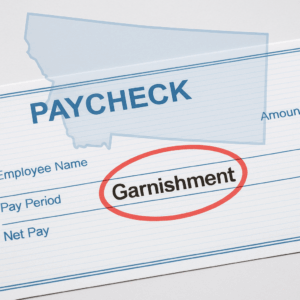 garnishment statutes interact with federal bankruptcy law.
Bankruptcy is a federal process, but wage garnishment in Montana is governed by Title 25, Chapter 13 of the Montana Code Annotated (“MCA”). Understanding this overlap is crucial when every dollar in your next paycheck matters.
How Wage Garnishment Works in Montana Before Bankruptcy
For most consumer debts—credit cards, medical bills, personal loans—a creditor must sue you in Montana state court before they can garnish your wages. That usually happens in the county where you live, such as Flathead County, Lincoln County, or Lake County.
A typical Montana wage garnishment process looks like this:
-
The creditor files a lawsuit in a Montana state district court or justice court.
-
You fail to respond within the deadline, so the creditor receives a default judgment.
-
The creditor then uses Montana garnishment procedures under MCA § 25-13-614 and related statutes to collect from your paycheck.
Montana allows wage garnishment for most consumer debts, but the percentage of wages that can be taken is limited, and certain earnings are partially exempt.
Because Montana wage garnishment is a state-law procedure, what happens after you file bankruptcy depends heavily on the timing of the garnishment and the employer’s payroll process.
How Bankruptcy Stops Wage Garnishments in Montana
The moment a bankruptcy case is filed—Chapter 7 or Chapter 13—the automatic stay under 11 U.S.C. § 362 goes into effect.
The automatic stay immediately stops:
-
Wage garnishments
-
Bank levies
-
Collection phone calls
-
Judgments and enforcement actions
This is one of the most powerful protections in federal bankruptcy law.
When your Montana bankruptcy is filed through the U.S. Bankruptcy Court for the District of Montana, the stay acts as a federal court order halting the garnishment—even if the creditor has a valid Montana judgment.
What About Money Already Taken from Your Montana Paycheck?
This is where the interaction between Montana garnishment law and the federal Bankruptcy Code becomes important.
If you file bankruptcy after your employer has deducted the garnished funds but before those funds are sent to the creditor, who owns the money?
-
Under federal law, money taken before the bankruptcy filing is usually not property of the bankruptcy estate.
-
Under Montana law, ownership of garnished wages turns on whether your employer has already transferred the funds to the sheriff or the creditor.
This means:
Your bankruptcy attorney must analyze both:
-
The federal automatic stay under 11 U.S.C. § 362(a)(2), and
-
Montana’s wage-assignment and garnishment statutes under MCA Title 25, Chapter 13
Because the answer can vary depending on the exact timing of your payroll cycle, the employer’s procedures, and the creditor’s actions, this is often a fact- and Montana-specific analysis.
Different Creditors Behave Very Differently in Montana
Many national creditors (Discover, Capital One, and medical agencies) tend to be cautious and will stop garnishing immediately.
But some aggressive debt collectors in Montana may try to argue that they can still receive funds that have already been withheld. Your attorney will know which Montana creditors typically:
-
Stop immediately
-
Push boundaries
-
Require a warning letter
-
Require an adversary proceeding or sanctions motion
Why You Need a Montana Bankruptcy Attorney Before the Next Paycheck
Your experienced Montana bankruptcy lawyer can tell you exactly:
1. How the automatic stay interacts with Montana garnishment statutes for this paycheck.
Timing matters. Sometimes, filing one day earlier can save hundreds of dollars.
2. Whether your specific Montana creditor is cautious or aggressive.
Local knowledge matters.
If you are facing a Montana wage garnishment, you can learn more by reviewing other blog posts dealing with the following topics:
Related posts:
 Bankruptcy Stops Wage Garnishments Before They Can Hit You
Chapter 13 Turns the Power of the “Automatic Stay” into a Superpower
How Quickly Will Bankruptcy Stop My Wage Garnishment?
The “Automatic Stay” for Married Couples in Chapter 7 and Chapter 13
The Collision between State Garnishment Law and Federal Bankruptcy Law
Bankruptcy Stops Wage Garnishments Before They Can Hit You
Chapter 13 Turns the Power of the “Automatic Stay” into a Superpower
How Quickly Will Bankruptcy Stop My Wage Garnishment?
The “Automatic Stay” for Married Couples in Chapter 7 and Chapter 13
The Collision between State Garnishment Law and Federal Bankruptcy Law